Concentration and Insight

The teachings of all the teachers in the world are like the leaves in a forest. But there are a few that we can use as medicine. Don’t take the whole tree, including root and stem. When you practise meditation or insight, you should take only things that will not let suffering occur in your mind, that can extinguish suffering at its source, can destroy delusion. You can take only the most important part of the teaching. The heart of the teaching I am talking about, is to be aware of yourself, to have the mind steady, to have complete knowing. When a thought arises, you should see it, know it, understand it in every manner, and know how to prevent it from deceiving you.

According to Lord Buddha’s teachings, there are many procedures to cure suffering. You should choose one of them with mindfulness and wisdom.

What you should understand in practising Dhamma is “calmness”. There are two kinds of calmness:

  1. Concentration (Samathapractice) is calmness without liberating knowledge. It is calmness under the power of delusion.
  2. Insight (Vipassanapractice) is calmness that you clearly know, really know, clearly see, and really see. You can practise this kind of meditation while you are working, sitting, eating, whatever you are doing. You don’t have to stay still but should know the movement of body and mind every moment. When the body moves, feel it; when the mind moves, know it. The movement of mind is thought. As soon as a thought arises, you should know it, understand it, and manage to conquer it. Do the continuous practice until you achieve total awareness; you will have the knowledge that liberates. You will see, you will know, you will understand.

Practising correctly means seeing, knowing, understanding by and in yourself. A knowledge and understanding that cannot from anyone else. When you practise correctly the not-knowing just disappears while the knowledge that liberates appears in its place; stupidity disappears and wisdom will immediately replace it; darkness and unhappiness disappear while brightness and calmness will be there instead.

~ Teachings of Luangpor Teean
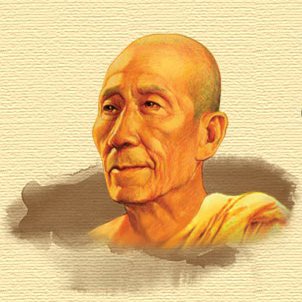
Luangpor Teean teaching, spirituality, meditation
100th Luangpor Teean  Image credit- @Luangpor_Teean

PS:  Dynamic Meditation, Mahasati meditation is a form of mindfulness meditation. It is a technique developed by Thai Buddhist reformist Luangpor Teean Cittasubho. Mahasati Meditation uses the movement of the body to generate self-awareness and is a powerful tool for self-realization. Practiced throughout Asia and in theUnited States, this method of meditation is appropriate for anyone regardless of religion or nationality.

Source: Wikipedia.org.

Faith

Faith

If you think your faith in God does God a favour, you are mistaken. Your faith in God does nothing to God. Faith is your wealth.

Faith gives you strength instantly. Faith brings you stability, centeredness, calmness and love. Faith is your blessing. But here is a paradox: if you lack faith, you have to pray for faith. Yet to pray, you need faith.

People put their faith in the world, but the whole world is just a soap bubble. People have faith in themselves, but they do not know who they are. People think they have faith in God, but they do not really know who God is.

There are 3 types of faith:

  • Faith in yourself– Without faith in yourself, you think, “I cannot do this. This is not for me. I will never find freedom in this life.”
  • Faith in the world– You must have faith in the world or you cannot move an inch. You deposit money in the bank with the faith that it will be returned.  If you doubt everything, nothing will work for you.
  • Faith in the divine– Have faith in the Divine and you will evolve. All these faiths are connected. You must have all three for each to be strong. If you start doubting one, you will begin to doubt everything.

Atheists have faith in themselves and faith in the world, but not in God. Then they do not have complete faith in themselves. And their faith in the world cannot be constant because the world is always changing. Lack of faith in God, the world or yourself brings fear. Faith makes you full-faithful.

Having faith in the world without having faith in God does not bring complete peace. If you have faith and love, you automatically have peace and freedom. People who are extremely disturbed should only have faith in God.

Q. What is the difference between faith and confidence?

Faith is the beginning. Confidence is the result. Faith in yourself brings freedom. Faith in the world brings you peace of mind. Faith in God evokes love in you.

~ An excerpt of Sri Sri Ravi Shankar. Gurudev Sri Sri Ravi Shankar is a humanitarian, spiritual leader and an ambassador of peace. He is the founder of the Art of Living Foundation. Through his life and work, Sri Sri has inspired millions around the world with a vision of a stress-free, violence-free world. He has developed courses that provide techniques and tools to live a deeper, more joyous life and he has established nonprofit organizations that recognize a common human identity above the boundaries of race, nationality, and religion.

You can read more about him here


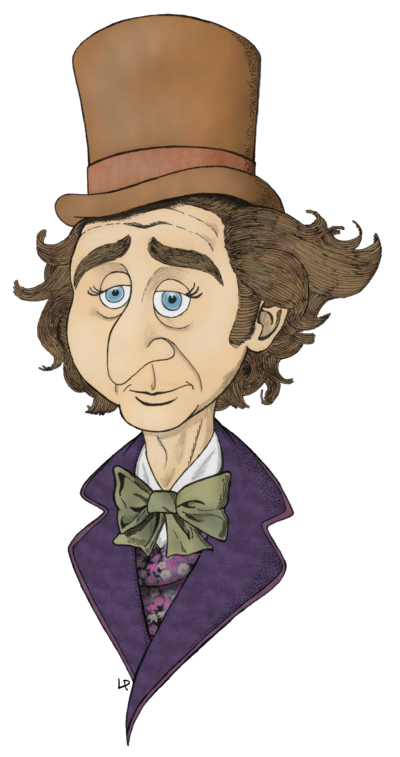
Willy Wonka- cartoon

Star of ‘Willy Wonka’ is no more

Gene Wilder, who became Hollywood’s one of the most iconic comic actors with his delightfully funny performances in films directed by Mel Brooks has passed away. He was 83.

Wilder made his own name in the industry with films like “The Producers,” “Blazing Saddles,” “Young Frankenstein”, “Willy Wonka and the Chocolate Factory”, and “Stir Crazy” passed away early Monday morning at his home in Stamford, Connecticut. His nephew Jordan Walker-Pearlman said he died of complications from Alzheimer’s disease.

Jerome Silberman aka Gene Wilder, Willy Wonka star no more
A black-and-white photo of Wilder smiling. Wilder in 1970. Born, Jerome Silberman Image credit

Born as Jerome Silberman in Milwaukee, Wisconsin, in 1933, he chose Gene Wilder as his professional name at the age of 26, out of admiration for the character Eugene Gant in “Looking Homeward”, “Angel”, and the playwright Thornton Wilder. He started acting at age 12 before attending the University of Iowa and the Old Vic Theatre School in Bristol, England. His professional debut came in Off Broadway’s “Roots” in 1961, followed by a stint on Broadway in Graham Greene’s comedy “The Complaisant Lover”, which won him a Clarence Derwent Award as promising newcomer. His performance in the 1963 production of Brecht’s “Mother Courage” was seen by Mel Brooks. The two went on to deliver some classic comedies of 20th century. In 1967, the comedy star essayed his first memorable big screen neurotic, Eugene Grizzard, a kidnapped undertaker in Arthur Penn’s classic “Bonne and Clyde.” The next was “The Producers”, in which he played the hysterical Leo Bloom, an accountant lured in a money bilking scheme by a theatrical producer. Directed and written by Brooks, the film brought Wilder an Oscar nomination as best supporting actor.

Willy Wonka and Chocolate Factory
Image credit- musingfromus.com

In 1971 came ‘Willy Wonka’, one of his most beloved characters. Based on the children’s book by Roald Dahl. ‘Willy Wonka and the Chocolate Factory’ the film follows Charlie, who clinches a golden ticket to gain access to the enchanting factory, and is joined by other lucky children.

Wilder played the mysterious, Mephistophelean factory proprietor of the title, dumping spoiled children into ironic fates. His performance of the song “Pure Imagination” is wildly considered a classic film moment.

He got full-fledged film stardom with two other Mel Brooks comedies, both in 1974: Western spoof “Blazing Saddles” and a wacko adaptation of Mary Shelley’s most famous book entitled “Young Frankenstein”, in which he portrayed the mad scientist with his signature mixture of hysteria and sweetness.

Apart from the director, Wilder frequently collaborated with comedian Richard Pryor. The two starred together in films like “Silver Streak” and “See No Evil Hear No Evil”. Wilder was survived by his fourth wife Karen Boyer, whom he married in 1991 and his nephew.

Did you know ?

Dark Doings

The moody Hamlet is often called the melancholy Dane. Melancholy means gloomy, but it literally refers to  “black bile.” You might recognise its root parts in melan ( a dark pigment) and chole (gall or ill temper). In medieval times, bodily “humours” were thought to influence our moods, black bile being one of these fluids.

Dark doings, Hamlet, Literature
as Hamlet, looks at Yorick’s skull by baslow – Image credit

Sports Bytes

Do you know the 24-second Rule ?

Basketball- Sports bytes
A Basketball Game | by Jurvetson

In international basketball, a team has 24 seconds in which to try for a goal after gaining possession of the ball.  If they fail to shoot during that period, possession is handed to the other team.


Locked room mysteries-Genre crime fiction

What are ‘locked-room’ mysteries?

The locked room mystery is an intriguing type of crime fiction that revolves around an offence being committed in such a way that it seems impossible to determine how it was done. Usually, a murder victim is discovered in a room locked from the inside with no other apparent exit or entry route, making the readers wonder how the killer gained access and then vanished into thin air!

The plot uses the ‘red herring’ technique in which the author deliberately casts an innocent person as guilty in order to distract or mislead the reader.  The true culprit is armed with a seemingly unbreakable alibi and remains undetected till the end.  The intelligent murder mystery is solved in a dramatic climax.

This format established itself as the sub-genre of crime fiction in the 19th century although some examples are also found in ancient Greek literature. The format gained popularity in 1920’s and 30’s thanks to writers like Arthur Conon Doyle, Joseph Cummings and Agatha Christie.

Locked room mysteries-Crime fiction
The Hollow Man by John Dickson Carr
Image credit- www.thelockedroom.com

John Dickson Carr is considered the master of locked-room mysteries. His story Hollow Man (1925) was voted as the best locked-room mystery ever by a panel of eminent mystery writers and reviewers in 1981.

Locked room mysteries are generally short stories as it is difficult to sustain a puzzle format in a novel.

https://www.flickr.com/photos/icma/

Sports Bytes

Toss

In cricket, the captains of the two sides have to toss for the choice of innings on the field of play, not earlier than 30 minutes nor later than 15 minutes before the scheduled time of play.

The captain of the winning side has to notify the opposing captain of his decision to bat or field. Once this has been communicated, the decision cannot be altered.

Curve

Curve yoga-Image credit- by Adrian Valenzuela (Flickr.com)
(Setu Bandha Sarvangasana)

Around the world, people are forming a Curve with their bodies. It is the bridge pose in Yoga or Setu Bandha Sarvangasana. Millions stretch and bend on the International day of Yoga

International Day of Yoga, or commonly referred to as Yoga Day, is celebrated annually on June 21 since its inception in 2015. An international day for yoga was declared by the United Nations General Assembly (UNGA) on December 11, 2014, almost unanimously.

Yoga is a 5,000-year-old physical, mental and spiritual practice which has its origin in India.  It aims to transform both body and mind.

Benefits of Yoga:

  • Increased flexibility.
  • Increased muscle strength and tone


//platform.twitter.com/widgets.js


*/Image credit- by Adrian Valenzuela (Flickr.com)/*

Housie

Housie

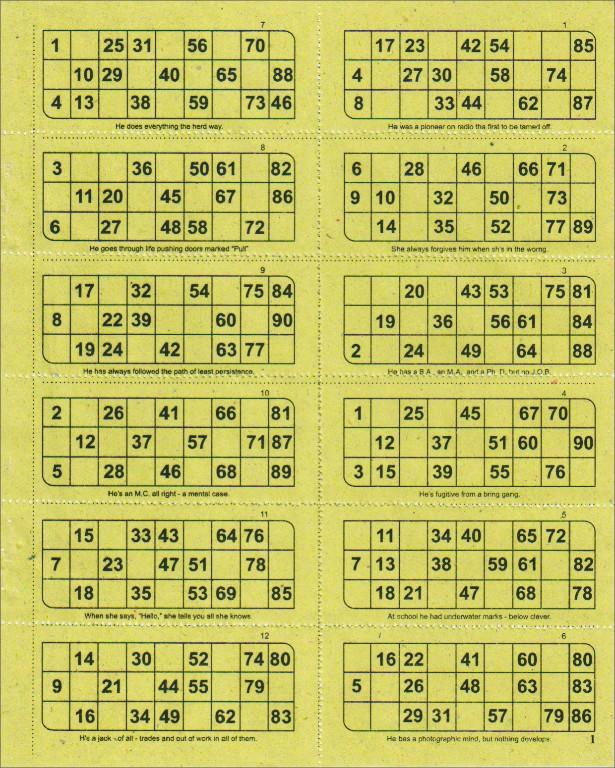
Housie also known as Bingo and Tambola. It is a gambling game played in Britain, New Zealand, Australia and India.  In this game, the players mark off numbers on their ticket as they are called out randomly.

A housie ticket is as shown above. It comprises fifteen numbers, set in nine columns by three rows. The players when they come to the venue have to buy tickets or book of tickets. The game has a compere or a caller, whose task is to call out numbers and to check the winning tickets. He/ she will then announce the prize or prizes for each game. Usually, the prizes are given as under:

Full House– All the fifteen numbers have been called and ticked off on the ticket.

Line–  Covering the horizontal line of five numbers on the ticket.  The prizes are given to top, middle and bottom line winners.

Compere or caller slangs- Usually, when the numbers are called out they have slang terms which are as under:

Number 1 – “Kelly’s Eye”.

Number 10- “10 Downing Street”

Number 12- “Dozen”

Number 45- “Halfway there”

Number 69 – “Dinner for Two Sixty-Nine”

Number 88- “Two Fat Ladies”

Number 90 –Top of the shop”.

Bingo- “Full House”


*/This post is inspired by Weekly Photo Challenge Numbers./*