BRICS 2026: India–China Signalling Ahead of the Summit
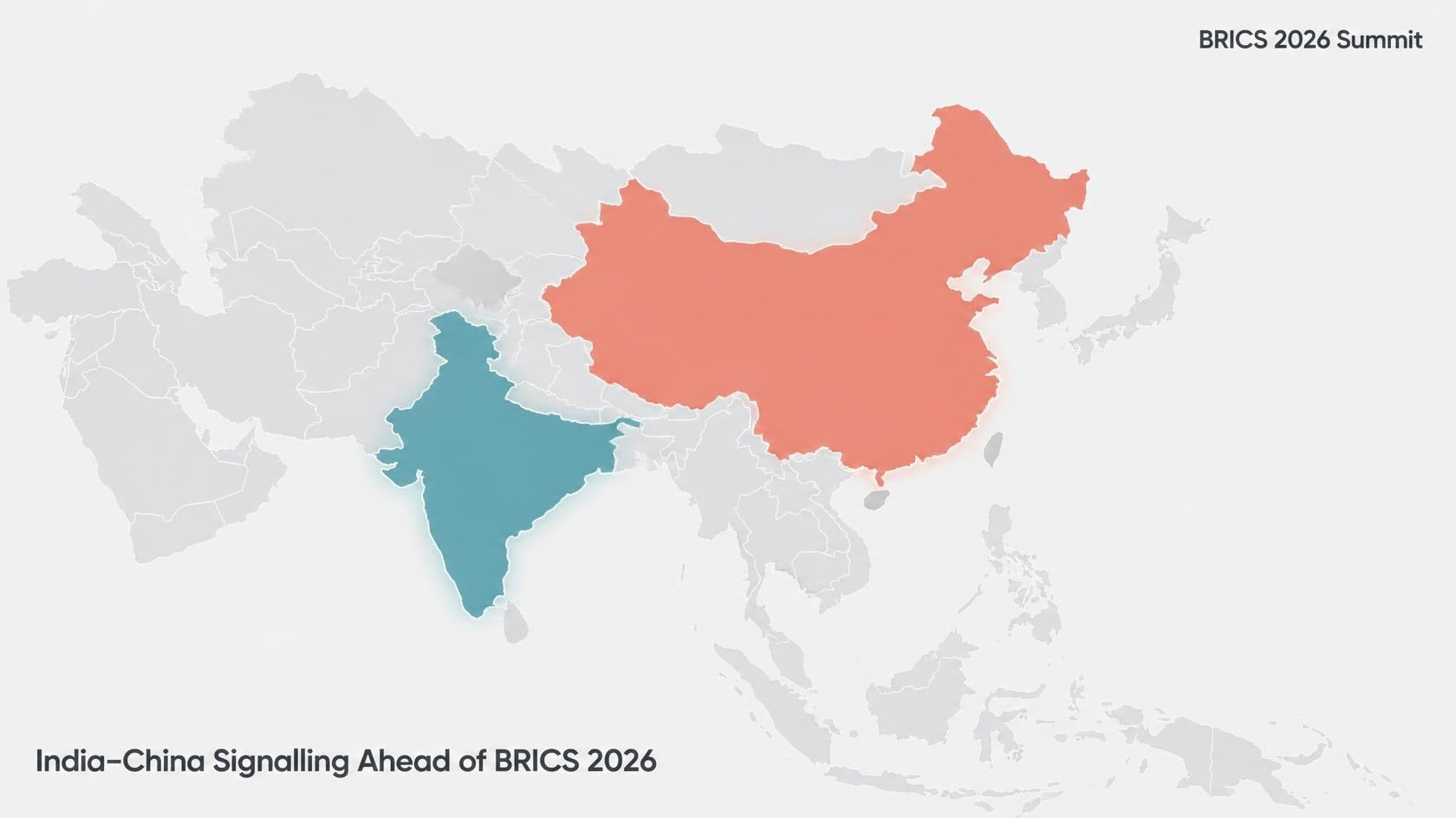
As the BRICS Summit approaches, the diplomatic temperature between India and China has risen again — not through a dramatic confrontation, but through something subtler and more revealing: a disagreement over the readout of a meeting.
China’s official summary of the Jaishankar–Wang Yi interaction claimed India “respects China’s sovereignty” on Taiwan and Xizang (Tibet). India responded sharply, clarifying that it is India that raises sovereignty issues, pointing directly to China’s illegal occupation of Indian territory in J&K and Ladakh since 1963. The message was unmistakable: India will not allow China to frame the narrative, especially not in the week leading up to BRICS.
This is classic pre‑summit signalling — and it tells us exactly how India intends to walk into the room.
1. The Sovereignty Question Returns to Center Stage
India’s response wasn’t just a correction. It was a reminder.
A reminder that border peace is the foundation of normal ties. A reminder that sovereignty is not a one‑way street. A reminder that India will not quietly accept China’s framing of sensitive issues.
This matters because BRICS is no longer just an economic grouping. It is a geopolitical stage — one where narratives, alignments, and diplomatic posture shape how the Global South sees itself.
2. China’s Positioning: Cooperation With Conditions
China’s messaging ahead of the Summit has been unusually warm:
- support for India’s BRICS chairship
- calls for deeper coordination
- emphasis on “positive momentum”
- references to multipolarity and developing‑country solidarity
But the readout controversy shows the limits of this warmth. China wants cooperation — but on its terms. India’s pushback signals that cooperation will only happen on mutually respected terms, not unilateral interpretations.
3. What India Wants Going Into BRICS
Behind the diplomatic language, India’s priorities are clear:
- Border stability as a prerequisite
- Fair market access and predictable supply chains
- Reduced trade imbalance
- A BRICS agenda that reflects real development needs
- A multipolar world that isn’t dominated by any single pole
India’s message is simple: BRICS must be a platform for genuine cooperation, not a stage for strategic messaging.
4. Why This Summit Matters More Than Usual
BRICS has expanded. Its economic footprint has grown. Its political relevance has sharpened.
And in 2026, the grouping sits at a crossroads:
- global supply chains are shifting
- energy corridors are unstable
- inflation cycles are unpredictable
- geopolitical blocs are hardening
- developing nations want more agency
India’s assertive tone ahead of the Summit reflects this moment. It is not confrontation — it is clarity.
5. What to Watch This Week
As the Summit begins, three signals will matter:
1. India–China tone in the final communique Does the language reflect balance or strategic leaning?
2. BRICS agenda priorities Energy security, digital infrastructure, trade corridors, and development financing will be key.
3. India’s positioning within the expanded BRICS How India frames leadership, cooperation, and sovereignty will shape the next year of diplomacy.
Closing Note
The disagreement over a readout may seem minor, but it reveals something deeper: India is entering BRICS 2026 with a clear, assertive diplomatic posture — one that protects sovereignty, demands balance, and insists on mutual respect.
The Summit will tell us how the rest of BRICS responds.
I