BRICS 2026: Day 1 & Day 2 — A Governance Snapshot
The BRICS 2026 Summit opened with a clear emphasis on institutional reform, digital cooperation, and development‑aligned architecture. Over the first two days, member states outlined priorities that shape the year’s Chairship and set the tone for multilateral coordination ahead.
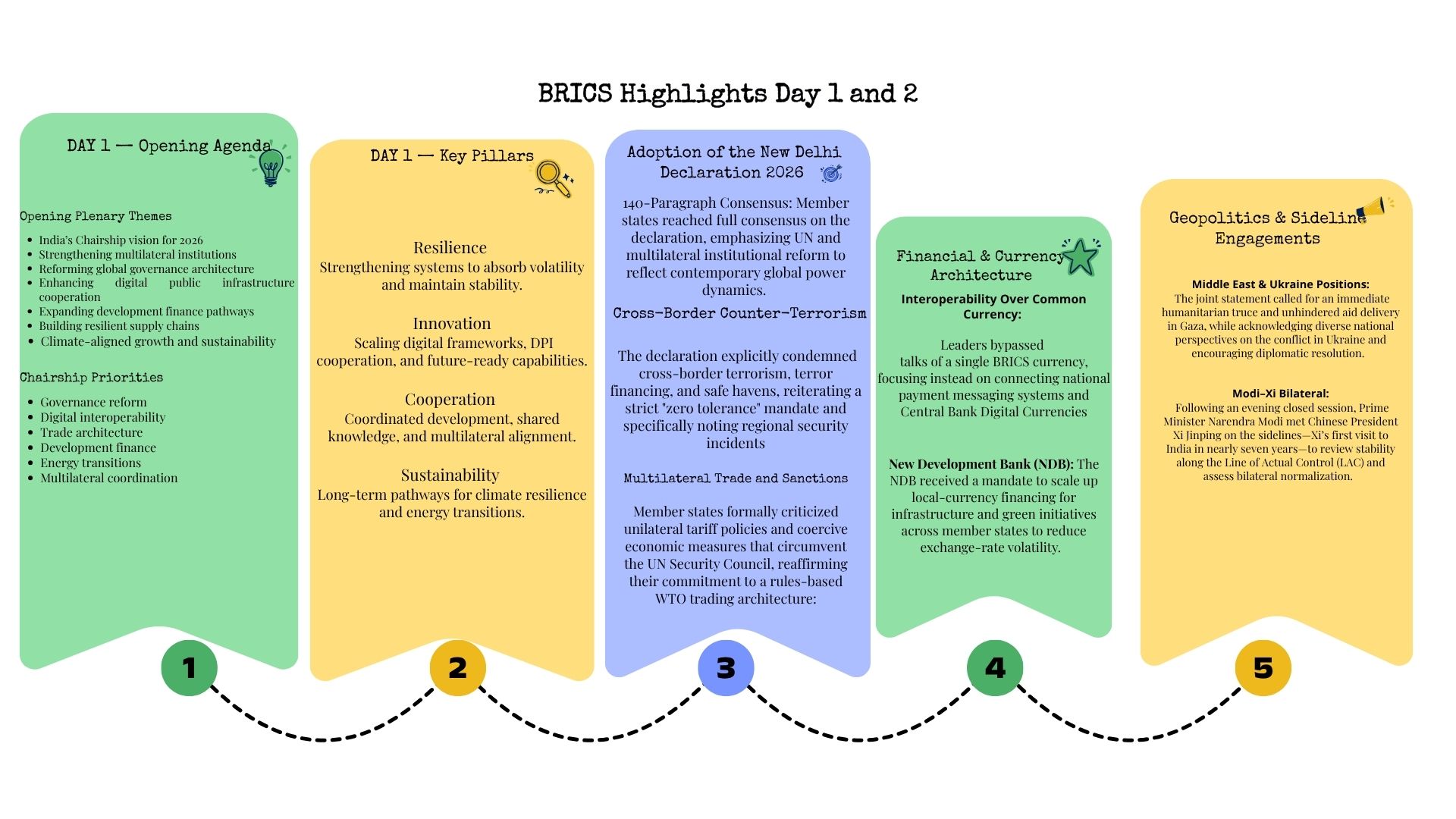
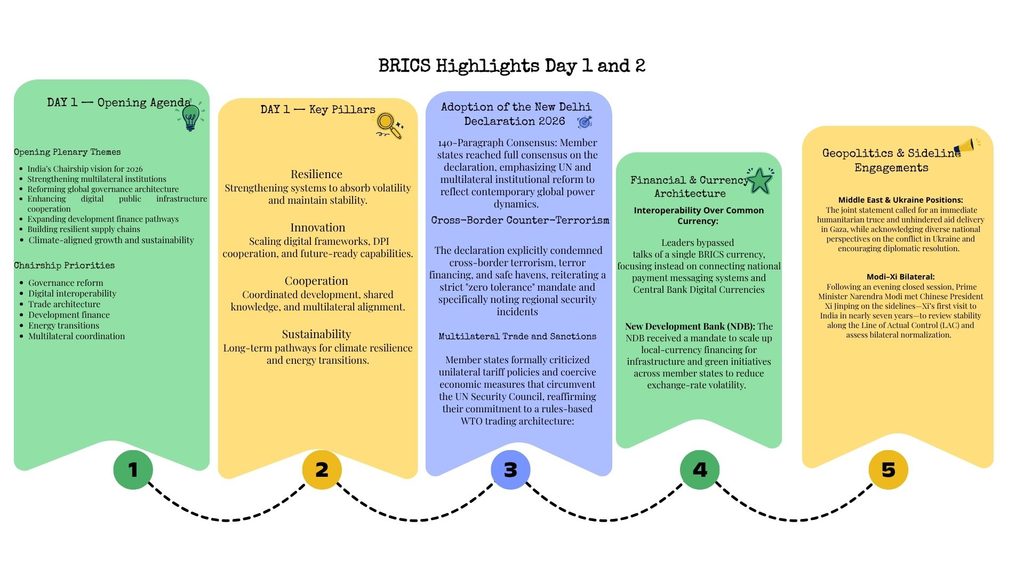
Below is a visual summary of the key themes and signals from Day 1 and Day 2.
Day 1 — Opening Agenda
The opening plenary focused on strengthening multilateral systems and aligning governance frameworks with contemporary global realities. India’s Chairship vision emphasized:
- reforming global governance architecture
- enhancing digital public infrastructure cooperation
- expanding development finance pathways
- building resilient supply chains
- climate‑aligned growth
These priorities anchor the Summit’s broader direction for 2026.
Day 1 — Key Pillars
The Chairship introduced four foundational pillars:
Resilience — strengthening systems to absorb volatility Innovation — scaling digital frameworks and DPI cooperation Cooperation — coordinated development and shared knowledge Sustainability — long‑term climate and energy transitions
These pillars serve as the structural lens for all subsequent discussions.
Day 2 — Signals from the New Delhi Declaration
Day 2 delivered the first major governance signal: full consensus on the New Delhi Declaration 2026, a 140‑paragraph document reaffirming commitment to institutional reform and multilateral alignment.
Key highlights include:
Cross‑Border Counter‑Terrorism
A strict zero‑tolerance stance on terror financing, safe havens, and cross‑border incidents.
Multilateral Trade & Sanctions
A critique of unilateral tariff policies and coercive economic measures outside UN frameworks, with renewed support for a rules‑based WTO architecture.
Financial & Currency Architecture
Rather than pursuing a single BRICS currency, leaders prioritized interoperability:
- connecting national payment messaging systems
- exploring Central Bank Digital Currency (CBDC) linkages
- expanding local‑currency financing through the New Development Bank
This approach reduces exchange‑rate volatility while preserving monetary autonomy.
Geopolitics & Bilateral Engagements
The joint statement called for:
- an immediate humanitarian truce in Gaza
- unhindered aid delivery
- diplomatic pathways on Ukraine
On the sidelines, Prime Minister Narendra Modi and President Xi Jinping held a bilateral meeting — Xi’s first visit to India in nearly seven years — reviewing stability along the Line of Actual Control and broader normalization.
What Comes Next
Stay tuned for Day 3 BRICS SUMMIT-
- governance
- architecture
- digital layer
- coordination
- path ahead